
Come dance with me: council edition
By Rashelle Predovnik
May 2026
OPINION
There was a time when council meetings were built around the radical notion that the public might actually ask questions.
Now, thanks to the ever-evolving choreography of rule changes, attending a council meeting in the Shire of Toodyay feels less like civic engagement and more like auditioning for a low-budget ballroom competition where nobody knows the steps and the judges keep changing the rules halfway through the song.
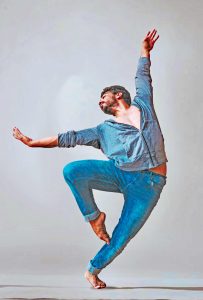
Welcome to Come Dance With Me – the newest interpretive performance from the shire president and the Committee for Controlled Movement.
The music begins at public question time as ratepayers step up to the microphone ready to perform.
But don’t expect to ad-lib.
This is not a freestyle event.
This is the ‘two-step’.
Two questions only: then sit down.
Next partner please.
The rhythm is elegant in its inefficiency.
One resident rises, approaches the microphone, asks two carefully rationed questions, then shuffles away while the next resident takes their turn crossing the dancefloor.
By the time each partner change is complete, precious minutes have danced away.
In Toodyay, only 15 minutes is allowed for public question time – which sounds generous until you realise half of it is spent watching people rotate on and off the microphone like disappointed contestants on Dancing With The Stars: Local Government Edition.
It’s a masterclass in movement without momentum.
Meanwhile, journalists trying to ask questions by email are left standing outside the ballroom pressing their faces against the glass.
Three separate media enquiries of mine were emailed in beforehand.
None were answered.
None even made it onto the dance card.
Apparently, accountability now requires physical attendance at a council meeting because nothing says ‘transparent governance’ quite like forcing residents and journalists to queue at a microphone for the privilege of very limited interaction.
The rules themselves seem to pirouette constantly.
Procedures change.
Formats shift.
Footwork evolves.
Residents arrive having learned last month’s routine only to discover council has moved on to a new dance.
There is something strangely poetic about travelling to a council meeting because it is now the only place questions will be answered.
Unsurprisingly, the unanswered questions – piling up over four weeks – become an ever-growing troupe of dancers waiting in the wings.
But the 15-minute stage is too small and in the end, almost nobody makes it onto the floor long enough to dance all the questions they came to ask.
By the time my turn arrived, I managed two questions before the music faded and the curtain fell.
No encore.
No follow-up.
Just a polite nod from the ballroom stage manager and the unmistakable feeling that the purpose of the dance was never communication at all — merely choreography.
Perhaps next month council can simplify things further.
Maybe residents could communicate entirely through interpretive movement.
One spin for ‘yes’.
Two spins for ‘question taken on notice’.
And a slow waltz toward the exit for anyone hoping for genuine engagement and their questions answered.