On leave, on track? Question asked about a temporary CEO appointment
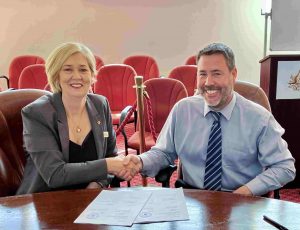
 

Deputy shire president, Shelley Dival congratulates newly appointed CEO Aaron Bowman in August 2024.
Pic supplied Facebook.

By Rashelle Predovnik
June 2026

Ratepayers have sought clarity about the status of Toodyay chief executive officer Aaron Bowman who has been absent from the shire for months while a temporary CEO continues to fill the role.

Counting the cost

Allan Henshaw, who served as shire president from 2001 to 2005, asked questions at the June council meeting, including the combined cost to ratepayers of paying for both the CEO and the temporary CEO.

In response, staff advised that employee salaries were confidential.

But August 2024 council minutes, that are publicly available online, confirm Mr Bowman’s total remuneration package was $245,496.

Last month, council appointed Alan Hart to be a temporary CEO from May 12, 2026 to May 12, 2027, during a special council meeting held on May 12.

In that meeting, council agreed to pay Mr Hart the cash component of Mr Bowmans salary package.

Shire President Mick McKeown said the appointment of a temporary CEO was required under council policy when a CEO was absent for an extended period.

Driving the Debate

Mr Henshaw also asked if the CEO still had the use of a company car paid for by the Shire of Toodyay.

Cr McKeown confirmed a shire-provided vehicle was part of Mr Bowman’s CEO remuneration package and that he would not discuss the personal affairs of an employee.

 Mr Henshaw told The Herald he asked questions because he wanted to find out what the situation was regarding the absence of the CEO and its effect on the shire.

“Ratepayers need to know what it’s costing us,” he said.

“I asked about the cost to ratepayers of effectively employing two CEO’s because no end date for Mr Bowman’s leave has been publicly announced.”

Mr Henshaw said he was not interested in the reasons for Mr Bowman’s leave, but rather the procedures and plans the shire had in place.

He said he wanted to know whether the arrangement was likely to be long-term, whether the shire could afford to continue paying both the CEO and a temporary CEO, and what succession plans existed if the situation was not resolved soon.

“All questions which can be answered without impinging on the CEO’s privacy,” he said.

A test of leadership

The former shire president said he was not impressed by the way the current shire president responded to his request for a public statement to be issued explaining why a temporary CEO had been appointed.

He said the shire’s failure to issue a public explanation was fuelling speculation and damaging public confidence in the council’s governance.

“I had to sit down in amazement after I asked the question about why the council was not keeping the public informed about the situation and the shire president’s response was to ask me how he should respond.

“Frankly, if the shire president doesn’t know how he should respond then perhaps he should be asking himself whether he ought to be in that chair.”
Seal of disapproval: former works boss challenges road project costs

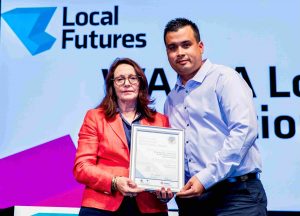
WALGA President Karen Chappel presented a road safety award to the Shire of Toodyay in September 2023.  The award was accepted by Aldo Lamas,the shire’s coordinator for civil works and maintenance.

By Rashelle Predovnik

June 2026

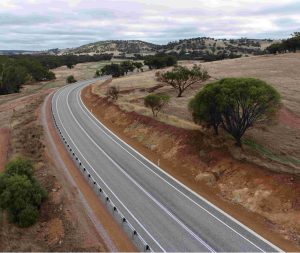
The shire’s former civil works and maintenance coordinator has repeatedly questioned what he suspects may be a significant overspend on the Bindi Bindi Rd project due to poor project management and lack of council oversight.

And he is yet to get a complete response to his questions.

Aldo Lamas is concerned the shire applied a seal on section of the road that didn’t need it, which could cost ratepayers anywhere between $350,000 to $700,000 depending on what seals were applied.

Paving the way to overspending?

Mr Lamas told The Herald the first section was completed in the 2023-24 financial year, which included a primer seal and two-coat hot seal (14mm aggregate for the first coat and 10mm aggregate for the second coat).

The second section, which is less than a year old, received a 5mm chip seal as a temporary preservation treatment due to delays in the sealing works.

This was then followed by a primer and two-coat hot seal using 10mm aggregate for the first coat and 7mm aggregate for the second coat.

“Technically, this results in three coats of seal within a short period, and now additional coats are being applied to various sections of the road,” he said.

“In my opinion this is not required, as the road surface is in excellent condition with no visible defects.

“A seal of this type would normally have an expected service life of 10–15 years before renewal or resealing is necessary.”

Mr Lamas’ said he also believed there were several other roads in far greater need of sealing, which were not completed in the 2024-25 financial year due to the lack of Road to Recovery funding.

Including Hoddywell Rd, Salt Valley Rd, Beejoording Rd, Davies Rd and Phillips Rd.

A roadblock to answers

Mr Lamas questions on the project span back to August 2024 when he was a community representative on the Works Advisory Committee.

He joined that committee because he believed his technical expertise would help ensure infrastructure projects were properly scrutinised on behalf of ratepayers.

But in December 2024 CEO Aaron Bowman wrote to advise Mr Lamas council had resolved to disband the committee.

“We believe that the types of questions being asked at the committee level are best responded to via normal business correspondence, rather than through a committee or working group,” he said.

“This approach will allow us to address your queries more efficiently.”

But three months later Mr Lamas was told he was sending in too many questions, which had become a matter of significant concern regarding the volume and nature of his enquiries and service requests.

In a letter dated March 18, 2025, Mr Bowman said the disproportionate volume was placing an undue strain on the shire’s limited resources.

He said it also impacted on the shire’s ability to serve the broader community effectively.

But Mr Lamas said as a resident and a ratepayer, he was entitled to ask questions and he challenged Mr Bowman’s claims the number of questions he asked was excessive.

Due to his technical background Mr Lamas worked at a high level of detail and asked questions he believed were necessary to understand projects, costs, risks and decision-making process.

He told The Herald he had asked between four to five questions a month. 

He said his questions had piled up because they were simply not being responded to by staff, even though they had been taken as questions on notice at council meetings held in September, October and December.

 He said his questions and the responses given at council meetings were also not included in the council minutes, despite this being a requirement under the Act.

He said if his questions been answered in a timely manner, it would have led to less follow up questions.

The road ahead lacks detail

In May 2025 Mr Bowman thanked Mr Lamas for his correspondence and said the shire would not be providing further comment in relation the matters raised in his letter.

But Mr Lamas has continued to ask anywhere between two – 10 questions at the shire’s monthly council meetings and responses taken on notice last month about the road seal were included in the agenda of the June council meeting.

The response said the final seal was included in the 2025-26 mid-year budget review and was approved and funded by Main Roads WA (MRWA) as part of the Regional Road Group funding program,” the response said.

“This is to complete the section of road.”

In response to The Heralds query asking Main Roads if they funded the works a spokesperson said Bindi Bindi Rd was under the care and control of the Shire of Toodyay.

Mr Lamas had also asked who made the decision to carry out these works and who approved them from the shire, as they did not appear to be included in this year’s capital works program.

But those question were not answered in the shire’s response.

Mr Lamas said up until the 2024-25 financial year, the budget was presented clearly, allowing ratepayers to easily identify funding sources and municipal expenditure.

But, in the current budget, this level of detail was no longer visible, and the relevant table appears to have been removed, making it difficult to understand how funds were being allocated.


Uniform rate plan sparks backlash from rural property owners

By Rashelle Predovnik
April 2026

Morangup residents have fired up against a council decision to create a uniform rate in the dollar, warning it will drive up costs for rural property owners and potentially deliver a bigger-than-expected financial blow when rates are finalised.

The modelling in the report to council that supported the uniform rate pushed GRV rural residential rates up by five percent and UV rural rates up 21 percent.

But critics of the move are bracing for a bigger hit when rates are finalised, as the percentages in the council report were based on last year’s lower rate setting.

This means the projected increases outlined in the report could end up even higher if this year’s rates are set above last year’s levels.

Uniform rates benefits some more than others

Council voted to change the method of rating from July 1 this year moving from differential rates to a uniform rate in the dollar for properties valued using Gross Rental Value (GRV) and Unimproved Value (UV) at its March meeting.

The uniform rate won’t significantly change the shire’s total rate revenue, which will stay about the same according to the report to council.

But it will have a big effect on many household budgets.

The report to council showed the biggest changes affected two groups: 410 properties in the UV General category saw their rates drop by 58 percent, whereas 198 UV Rural properties saw their rates jump up 21 percent.

The biggest category (1,055 ‘GRV Rural Residential’ properties) had a five percent increase.

Whereas 626 GRV Residential properties saw their rates fall by four percent.

A call for accurate data

But the figures modelled in the report to council were from last year and they will be outdated when council ratifies its new budget and sets its rates for the 2026-2027 financial year.

This means, the small decreases modelled in the March report to council could disappear and small increases could spike if council sets a rate this year higher than last year’s 2.2 percent.

The neighbouring shires of York, Chittering and Victoria Plains have a uniform rate structure.

Whereas Northam and Goomalling still use the differential rating model and so did Toodyay before the change last month.

In a statement the shire said this change will make rates fairer, clearer, and easier to understand, and it will help ensure long term compliance with rating laws.

“This isn’t about raising more money — it’s about simplifying the system and improving transparency,” the shire said in a statement.

“Slight reductions or modest increases may appear on individual rates notices, depending on your property type and valuation.”

But the actual percentage increases and decreases for this year are yet to be released.

The Toodyay Herald asked the shire to confirm that the figures to be advertised for public comment in May will be based on the final 2026–27 budget and updated modelling, rather than last year’s figures presented in the March report to council.

So the community could make informed submissions.

The Herald did not receive a response to its questions before we went to press.

The opportunity to have a say

A statement on a Morangup community website slammed the decision to hit Morangup residents with a rate hike — while Toodyay town residents rates went down — as divisive.

Although the shire said the change was not about raising more money, Morangup residents are being warned to brace for the first of many rate rises if council proceeds with its plans to flatten the system.

“The March decision is the method change — the reshuffling of who pays more and who pays less,” it said.

“It does not necessarily include whatever broader increase the shire may later apply through the 2026/27 budget.”

Morangup residents opposing the uniform model said they were not reacting to one isolated tweak.

They were reacting to a pattern over time of rising costs, town-centric assumptions, heavy shire spending programs, weak outer-locality voice, and now a council decision that shifted more of the rating burden onto rural residential, while giving town residential a reduction.

The unform rating model will be put out for public comment next month.

The proposal will be advertised for 21 days, seeking community feedback so the community can have their say.